Leverage App Store Signals for Growth in 2026
Unlock app growth by understanding the key algorithm signals and leveraging tools like Storeboost for strategic advantage in 2026.
Understanding and leveraging algorithm signals in the App Store is crucial for mobile app growth. As we approach 2026, these signals are becoming more sophisticated, requiring a nuanced approach to app store optimization (ASO).
Key Algorithm Signals
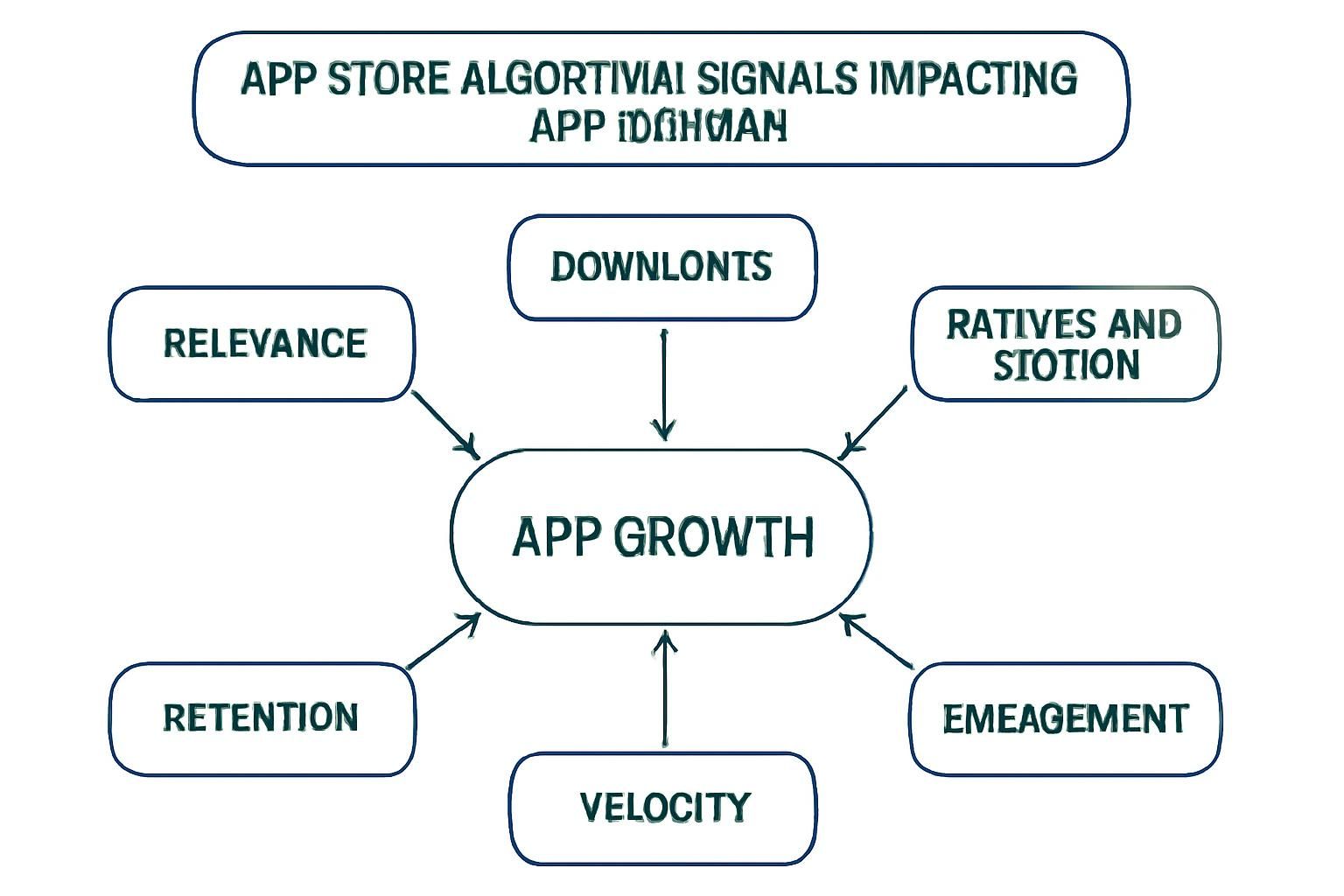
Algorithm signals in the App Store can be broadly categorized into three areas: metadata relevance, user engagement, and external factors. Each of these signals is critical for app visibility and ultimately, app growth.
Metadata Relevance: This includes the app's title, subtitle, keywords, and description. These elements should be optimized for both user search intent and algorithmic indexing. For instance, using a tool like Storeboost can provide insights into keyword performance and help optimize metadata for better visibility.
User Engagement: Downloads, retention rates, and user reviews fall into this category. The more engaged users are, the more likely your app will rank higher. High retention and positive reviews send strong signals to the algorithm.
External Factors: Marketing efforts, backlinks, and social media presence can influence your app's standing. While these are less direct, they contribute to overall app reputation and visibility.
Impact of Downloads and Ratings
Downloads and user ratings significantly affect an app’s ranking in the App Store. A high download rate indicates popularity and demand, which the algorithm rewards with better visibility. Similarly, apps with higher ratings tend to rank better.
However, it’s not just about the numbers. The velocity of downloads, particularly during a launch or update, can signal to the algorithm that the app is trending. This is where tools like Storeboost can be instrumental, offering strategies to boost download velocity through targeted campaigns.
The Role of A/B Testing
A/B testing is crucial for understanding what works best in terms of app store presence. Experimenting with different versions of app icons, screenshots, and descriptions can provide concrete data on user preferences. This iterative process helps in refining ASO strategies.
Real-world evidence shows that apps engaging in consistent A/B testing see up to a 30% increase in conversion rates. Storeboost, for example, provides robust testing frameworks that can streamline this process, allowing for data-driven decision-making.
The 2026 takeaway
By 2026, app growth will hinge on a deep understanding of app store algorithm signals. Mastering metadata relevance, optimizing user engagement, and leveraging external factors are essential. Tools like Storeboost can provide the competitive edge needed to navigate these complexities. Embrace A/B testing to continuously refine and adapt strategies, ensuring sustained app growth amidst evolving algorithms.